Showing posts with label books. Show all posts

Friday, 6 June 2014

Adaptation Fascination

Well, despite all best intentions, we have somehow managed to make it to June without another blog post. I am a terrible blogger but sometimes, reality gets in the way of your other activities. So, without further ado, let's dive into another exploration into the world of stories in all their forms.
_____________________________

What's your favourite book?

I can already see a few of you rolling your eyes but go with me on this one.

Have you got something in mind?

So what's your favourite film?

What about your favourite colour? Or your favourite song?

Maybe these were easy questions to answer or maybe they weren't. Maybe you had some trouble trying to figure out what you liked above all others.

But what if I asked you what your favourite adaptation was?

Suddenly the question becomes a lot harder. After all, adaptations come in many different forms from book to movie, graphic novel to movie or television series, film to stage production, music to stage show or, in a few cases, book to book. That doesn't even include the fact that sometimes these examples can go the other way (such as tie in novelisations, film musicals and even games).

And sometimes, even toys can get movie adaptations...which are adapted into games and toys. 

So what exactly do I mean by the term 'adaptation'? According to Oxford dictionaries, there are a number of definitions including 'a film, television drama, or stage play that has been adapted from a written work' but this is somewhat limiting. After all, not every written work is an original work and screenplays or scripts are not the same as a book or novel because of the intended medium. Screenplays are created with the understanding that they will become visual creations. Books do not have such limitations and therefore do not need to be concerned about what is on screen at any given time. However, the word 'adapt' has a much more appropriate definition; 'make (something) suitable for a new use or purpose'. In other words, to recreate a work for a different format or for a different audience.

This isn't nearly as simple as it may seem. After all, every medium has its own set of benefits and limitations that have to be acknowledged and considered. Visual mediums require less description. We don't need to be told that someone is scared because we can see it. But at the same time, it's easier to write the experience of someone flying rather than attempting to create it (budget notwithstanding).


'The Book was Better'


Everyone has their own opinions about good and bad adaptations that have been created over the years and there are many different opinions as to why they exist. One of the most common adaptations that exists, and the one I will be focusing on, is the book to movie adaptation and it is very easy to start comparing the two and declare that 'The book was better'. I am very guilty of doing the same thing and it is only in recent years that I have begun to understand more about how the two mediums work and the difficulties that exist in adapting. In some cases, it is very easy to stick to the original. The Hunger Games and Harry Potter films made a significant effort to stick as close to the original text as possible, with a few necessary tweaks to compensate for difference of medium. However, just sticking to the original text isn't enough and sometimes sticking too close to the original can cause problems of their own. Musicals can often come under scrutiny for this with many fans walking away declaring 'It's the stage show on a bigger budget'. We expect more from a film than we do for a book or a stage show in terms of visuals and soundtrack.

But what about those adaptations that veer wildly off-track and still manage to be good? What is it about them that manage to hit the mark when so many fail?

How to Train Your Dragon
is a very popular film with a great story and brilliant visuals, but many people are unaware of the fact that they are based on a series of books by Cressida Cowell…and they do not share many similarities with the film that shares their name. But does that make the film a bad adaptation?

Two different takes...
...on the same material. 

To a certain extent you could argue that it does because it changes the plot of the original story. But, as discussed before, even those that stay relatively faithful to the original texts will make some tweaks to the script in order to correspond with a new medium or current social structure. As a film, it had good characterisation, a coherent and interesting plot and some stunning visuals. It remained aware of its own medium and used it to good effect. As an adaptation, it brought the original book series to the attention of the audience and even influenced the author herself in how she handled the later books in the series.


Rewriting History


But not every adaptation comes from a work of fiction. How often have we seen something emblazoned with the words 'Based on real events' or 'Based on a true story'? What about historical events that are adapted for literature or screen? These don't have the same freedom as a work of fiction might because of the web of truth that surrounds it. Academics spend their lives studying and discovering the past and, depending on the story being told, those who lived it might still be around. While some creators would normally get around these issues by keeping historical figures and key events along the sidelines, there are those who prefer to have the big issues remain front and centre of the story. But there is no singular version of history, so how can these events be properly adapted for 'entertainment'?

It is important to understand one major issue; in any work regarding historical events, we will never get the complete story. Like any work of fiction, there will be a certain bias and we will be invited to sympathise with one side at the expense of the other. Some people will be forgotten or relegated to the background and sometimes, the order of events may be at odds with narrative timing and purpose. But what makes, for example, The King’s Speech better than Pearl Harbour in spite of their historical inaccuracies? A lot of it comes right back to the story and the characters. Most of us are not professional historians and we rely solely on the adaptations to explain what happened in the past and the people responsible, or how it affected everyone else. We may not have known George VI or Lionel Logue, but we can sympathise with the difficulties of overcoming a stammer and the pressures of public speaking. The film is about the men and their efforts, not about the outbreak of World War Two around them.

A friendship that would last a lifetime begins with a few simple words. 

In contrast, the events depicted in Pearl Harbour have no real narrative focus behind them beyond a few fictional individuals being action heroes, which is one of the biggest reasons why it frustrates and angers so many. The actual events of Pearl Harbour are ignored and glossed over in favour of creating an action movie with an historical setting. As a film, it is considered to be poor but as an historical adaptation that makes very little effort to acknowledge the event it is meant to portray, it is considered deplorable.

So what about a combination of the two? After all, not every original work has been created in the last twenty years. Works by Jane Austen, Sir Arthur Conan Doyle, C.S. Lewis or even William Shakespeare have been adapted and re-adapted over and over again for the stage, the screen and even condensed for children. So what do you do when someone takes an older work and creates a modern version of it, placing older stories in a modern context as Steven Moffat and Mark Gatiss did to create Sherlock?


'Past, have you met Present?'


Modern adaptations are very difficult to create because it isn't possible to just create a straight adaptation. It's not enough to have Romeo and Juliet just wandering around with mobile phones and the Internet and declare the adaptation modern. Other things such as social expectations, technology and even setting have to be taken into consideration. While Baz Luhrman didn't change the language of his Romeo and Juliet, he changed the setting and created modern versions of important elements to create the juxtaposition he wanted. Guns instead of swords, cars rather than horses and a Chief of Police instead of a royal prince.

One of the biggest issues that a modern adaptation has to take into consideration is the difference in social expectation between the creation of the original work and today. So, for example, in Pride and Prejudice, there is a great deal of focus on getting the Bennet sisters married off, something that would not be considered acceptable for many people in a contemporary setting. Some adaptations do make an effort to adapt the circumstances to reflect the changing times. So in Bridget Jones’ Diary it is Bridget who is searching for a boyfriend, and in Bride and Prejudice, Lalita Bakshi's mother is part of an older generation from India that sees marriage as an important way of securing a woman's future. But in both cases, the centrality of 'needing a man' is still present and can be quite off-putting, especially in a world where women are still struggling to be acknowledged as men's equals.

The Lizzie Bennet Diaries, a web series by Hank Green and Bernie Su, changes this central concept completely while still maintaining the central themes of the book. Instead of the focus being on marriage (apart from Mrs Bennet's hopes…at least according to Lizzie), the focus is on the girls' careers. In the original story, the need to marry off the girls was a necessary step to secure their futures. After all, a woman rarely had a steady income apart from a one-off dowry payment. Nowadays, women have more opportunities and are less dependent on men to secure their futures. So in The Lizzie Bennet Diaries, while the elements change, the overall themes and intents remain the same.

But what if those elements were changed on a much greater scale?

Sherlock Holmes has been adapted again and again and most recently, has been taken out of his historical setting of Victorian England and placed in 21st century London and New York in Sherlock and Elementary respectively. The former created a great deal of hype when it arrived because it was the first time this historical character had been taken out of his habitat in this way (I am not including Sherlock Holmes in the 22nd century here for obvious reasons). It was clever, it was slick and it made an effort to provide a modern twist to the old stories. But Elementary made waves for another major reason; the casting of Lucy Liu as Joan Watson.
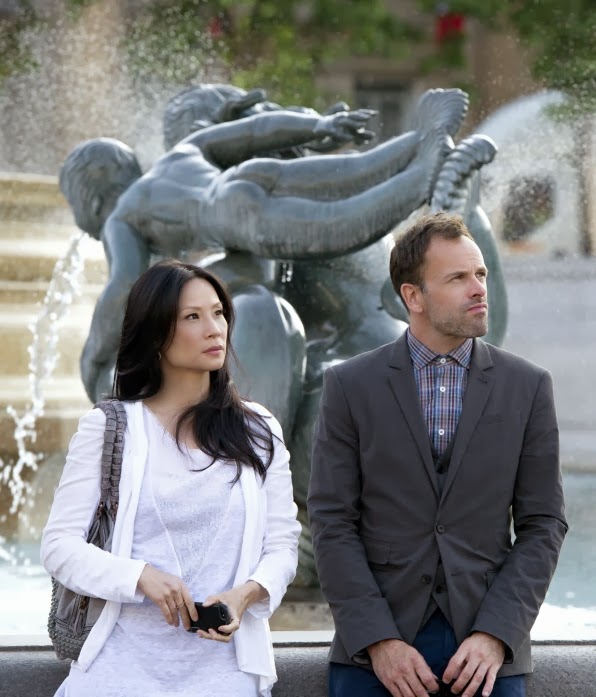
A partnership for the ages with a few little tweaks

This was a big deal. Holmes and Watson are one of the biggest bromances in literary history. Their friendship is deep, caring and utterly fascinating (not to mention the subject of much slash fiction but that is quite common). So by casting a woman, there were huge fears among Sherlock Holmes fans that this was a ploy to create sexual tension for the show and a way to get the two main characters together in a way that would not cause problems for conservative watchers. Fortunately (so far), the show has kept the bromance as it was and even made an effort to put the two characters on an equal footing. Joan is not a potential love interest or sidekick, she is a partner who Holmes is teaching his methods to, can contribute to cases and even solve some on her own. This was as far away from the original portrayal of the bumbling sidekick as you could get although opinions do differ as to whether these changes enrich or weaken the connection with the source material.

Conclusion


It is very hard to pinpoint what makes a good adaptation but one of the major things that needs to be taken into consideration is the change in medium and what alterations need to be made in order to tell a coherent story using that medium. An adaptation does not have to be completely faithful to an original source because it never can be. Times change. Society moves on. And interpretations alter. The original creator is rarely involved in an adaptation (although they might be consulted a few times during the process) and the original audience may not be the ones who are being targeted for the new product. Those who read the book may not necessarily be the ones who watch the film, the ones who will play the game or the ones who understand the history. They might know everything about the original story that is playing out before them but they might not. It is essential that an adaptation is able to stand on its own, no matter what form it takes. That does not mean spoon-feeding or holding the audience by the hand, but it does mean carefully considering the source material and using that to create an interesting and dynamic story with engaging characters. After all, the story you tell will be the first introduction to that world for somebody. Make sure it's a good one.

Tuesday, 20 August 2013

Quick update

It has been a long time since my previous post and my plans to re-read the whole Harry Potter series is still in effect. Sadly though, it must be confessed that I have not had the opportunity to pick up the first book due to reality giving me a kick in the backside.

Suffice to say I am once again unemployed and so the vast majority of my belongings, including the aforementioned books, are about to begin their new life in boxes until this changes. I may be able to get hold of the books another way and still continue my plans but it is much more likely that they will be put on hold until such times as I get settled elsewhere.

However, not all news is bad and I will continue to blog as and when I find myself with something to say. Hopefully I can continue writing about interesting topics that you might want to read and will continue to analyse things that you may never have considered in the meantime.

Make no mistake, I have not abandoned my plans. They have just been put on hold and I hope that it will not be long before I find myself able to take them up again.

Sunday, 23 June 2013

Alohomora!

It is no surprise to many of you (if indeed anyone is reading this) to find that I am a Harry Potter fan. Let's be honest, there were not many people in my age group who weren't. I have certainly encountered a number of adults who have mixed feelings about it, including one English teacher who claimed that she was forever grateful to J.K Rowling for teaching an entire generation how to pronounce 'Hermione' correctly.

It is very difficult to find someone who hasn't encountered the series in some form or another. Between the publicity and marketing that surrounded the books, to the point that a delay in publishing date was actually considered newsworthy, to the trailers and marketing for the films, Harry Potter was considered somewhat legendary in the realms of children's literature. Never before had a fantasy series aimed for children become so global, to the point that publishers are still looking for something that can replace the gap it left in the market. At least four of the books were in the top 25 for the Nation's favourite books (conducted by the BBC in 2003), when the series wasn't even complete. And that doesn't include the games, spin-offs and Pottermore itself. It spawned debates, brought up questions and, for many of my classmates, made reading popular.

And these were the covers for children!

I was about 10 years old when I was first given a copy of Harry Potter and the Philosopher's stone in an attempt to encourage my reading habit and give me something new to read that was suitable for my age group while still being challenging. Let me tell you, that is something that is difficult to achieve. I devoured that book and when I discovered that three had already been published at that point I may have (read 'did') made myself a bit of a pest during book fairs and trips to the bookshops, absolutely begging my parents to let me have the second book at the very least. After all, at this point I had no pocket money and my birthday was too far away.

Fast forward to Christmas and I had apparently been successful, because not only did I receive Chamber of Secrets but I was given all three books at once in a boxed set, and instantly handed my single copy to my little sister so that she could start her own discovery of Harry Potter and the world of Hogwarts that I had come to know and love. Her journey took a very different turn than mine, but we will get into that later.

Those three were the only books in the series that I did not directly buy myself and in a way, I am grateful for that because it meant that when I bought each book, I was buying it for myself and nobody else. They were my property. The journeys I had with these characters were mine. I didn't have to share them. I still did, but that was only because my siblings were only starting to discover why I loved the series so much and I wanted to talk to someone about it. In time, they bought their own copies and stopped borrowing mine.

I grew up with Harry, Ron and Hermione, eventually overtaking them in terms of age. But at no point when exploring their world through their eyes did I start getting annoyed at them because I was older than they were and felt I knew better. I may not have known anything about fighting a magical war and having a powerful wizard getting ready to kill me whenever I let my guard down. But I knew the struggles of school, how a teacher could make or break your desire to learn, the effort to find friends I could trust and the difficulty of living up to other people's expectations, no matter your age.

The last book was published in 2007 just before I left for university, and the last film was released in 2011, just after I had completed my undergraduate degree. I said goodbye to Harry at the same time I was saying goodbye to some pretty important stages in my life and that sense of endings and beginnings stayed with me for a long time.

But as we all know, time does not stand still. It moves on, twisting and turning without any regard for what we were or where we could end up. I am now 24, and rapidly approaching my 25th birthday. It has been almost three years since I last picked up a Harry Potter book and many more since I read the entire series from beginning to end. Life has carried on, but Hogwarts and the Boy-who-lived have been travelling alongside me in many different guises. I own a couple of Harry Potter games. I am part of Pottermore. I have plans to travel to see Harry Potter World with my sister at some point.

But all of this has made me wonder, what was it about Harry Potter that touched us so? Was it the fact that this mistreated little boy was someone special that appealed to us? Was it the thought of a magical world beyond us that caught our attention? Was it something to do with the author and how she treated us through her writing? Or, dare I ask, was it simply the fact that it came at the right time, when the Internet was growing and becoming more commonplace thereby allowing fans to connect across a global scale?

Creative Genius or Lucky Hack?
I love analysing and picking things apart, so now I am taking this moment to set myself a challenge; to read through the entire Harry Potter series and write about my thoughts and feelings book by book. I may mention films occasionally but this will be very much centred on what made me a fan at the start. Now that I know what's ahead and a lot of background information, what do I notice about the characters and the events surrounding them? Do I understand where everyone is coming from or do I still think someone is making the wrong choice? What do I notice about the writing itself and how does it change as the series goes on?

But most importantly, do I still have the same love for the world that J.K Rowling created that I did when I finished that first book all those years ago? Does it deserve a place in my adult heart or is it something that should be looked back on with a sense of nostalgia?

I don't know the answers but hopefully I can uncover something new on this journey and I invite you to pick up your wands, solemnly swear you are up to no good and come with me as I re-discover the world of Harry Potter!

Friday, 15 March 2013

Secret of the Blurb


The phrase ‘Never judge a book by its cover’ is something that I mentioned a while ago and at the time I discussed how inappropriate it is when considering books. The image and the general design of a cover generally tends to be the thing that catches a person’s eye and make them stop and take another look at it. To me, a more relevant phrase would be to ‘Never judge a book by its blurb’. A little description on the back can make or break a sale if it isn't engaging or pitched to the correct person. I have written a few of my own for various projects and know how tough it can be trying to explain what the book is about without giving away any major details. But I am also a book consumer and have read plenty of blurbs, basing my decision on whether or not to actually read a book on those little descriptions on the back.

Blurbs seem to fall into a few different categories:
  1.   The CliffsNotes- telling you the story in a few words.
  2.  The Misdirection-telling you PART of the story without revealing that the book will go a completely different direction from what it is implying.
  3. The Spoiler- a major plot point is revealed on the blurb but will not be revealed in the story until much later.
  4. The Enigma- which tells you nothing.
Of course there are variations of these themes and I do not doubt that you have come across others yourself. For example, I read a book a few years ago which implied that a major plot point was going to take place and be central to the book. It happened in the last quarter and was actually not that important to the story as a whole, making the blurb a mixture of the misdirection and the spoiler.

Personally, I am of the opinion that a good blurb tells you something about the story so you can make a choice about whether the genre and the topic are something you want to pick up and read. The Enigma drives me crazy. I hate going into something completely blind, especially if I will be spending money on it. In contrast, I do enjoy the Misdirection when it comes to blurbs because it keeps things fresh and, when the twist is revealed, can come as a pleasant surprise, providing added depth to characters and plot. Of course, a lot can depend on the mood of the reader at the time and the Misdirection can seriously backfire when not handled properly in text.

Which leads me to a book I have recently re-read which uses one of these blurbs to great effect. Love Comes Tumbling  by Denise Deegan. Now, normally I would give you a vague outline of the plot but considering this blog started with a brief analysis of blurbs, I feel it is only fair to actually share said blurb with you so that you understand what I am talking about.

Lucy Arigho is not the sort of woman to be swept off her feet…

So it’s completely out of character for her to race a man in traffic…and even more unusual when they meet again and she is entranced by the driver, a writer called Greg Millar.

Within eight weeks she is seriously considering Greg’s pleas that she marry him and wondering if she can take on his two motherless children. But before she can make a decision about becoming part of Greg’s world, events plunge her right into it-at the deep end. Lucy’s careful existence is turned upside-down and she has to face the fact that she doesn’t really know the man whose life has so overwhelmed hers.

Love Comes Tumbling is a powerful, gripping and original story about what happens when the craziness of falling in love ends and the craziness of real life begins.

Hello fairly generic cover which tells me nothing beyond this might be a Misery Memoir.
A fairly standard plot, yes? So where does the ‘misdirection’ part come in?

I ran this blurb past a friend of mine (who hasn’t read it) and asked them what they thought was going to happen. Their response was to ask me if this book was a Fifty Shade of Grey clone. Which this is not.

(For a very funny exploration of Fifty Shades of Grey, please read this blog. I promise you will not regret it)

When I picked up this book (on one of my ‘I’ve run out of books I will now raid everybody else’s bookcase’ sprees) I was convinced this was going to be an incredibly cheesy piece of chick-lit. Now I don’t mind chick-lit…when it has been written well. However, I do get frustrated by the focus on the protagonists and their attempt to find a man and live happily ever after because their lives are so unfulfilled at this point. But that is a whole other argument for a whole other day.

So, what exactly is the plot and why has this book affected me so much?

Well we are told a lot in the blurb so I will try to keep this brief and without spoilers as much as possible and will warn you ahead of time if we are about to leave the ‘Spoiler free’ zone.

Lucy Arigho is a graphic designer and heads up a design business with Fint, her gay best friend in Ireland (successful woman…of COURSE she has a gay best friend). She was engaged to be married but lost her fiancé in a car accident the year before. So, of course, when she spots someone driving dangerously it pisses her off. So much so that she tells him off and then proceeds to speed up to get rid of him, not realising that she is doing the exact thing she was condemning this guy for. Ooops.

And then she realises that this guy is going the same place she is. Double ooops.

And he is the reason her company is being called in for a design job in the first place. Is it possible to just start the day over?

Greg is interested and starts pursuing her, and Lucy is struggling to remember that she is mourning the dead fiancé, especially when Greg sympathises and shares his own experiences. He is a widower and the father of two young children who he had to more or less bring up on his own (with help from a nanny).

The two date, he meets her family and Lucy is swept away by his spontaneity and lust for life. She’s happy for the first time in ages and the two get engaged.

All of this happens within the first three chapters because the bulk of this story is not about this couple falling in love, but rather about what happens afterwards, as described in the blurb. So, where do we go from here?

Lucy has to get to know Greg’s children, something that she doesn’t do until the couple are engaged. She realises pretty quickly that this was a mistake and does her best to get to know Greg’s family. His brother is pretty accepting, but the nanny and the children are not. Toby is five and the quickest to warm to Lucy but Rachel hates her.

‘Aha!’ I hear you say. ‘This is a story about her struggle to find her place in this family and the book will end with the children loving her after all of her struggles and she will think everything is worth it.’

Well…kind of. The step-parent is hardly a new phenomenon, and various films and books do talk about the struggle between children learning to accept a new family member and adults who suddenly find that they need to learn how to be parents. I’m not going to pretend that I am either a step-parent myself or that I have ever had one, but I do love how Lucy’s attempts to connect with the children are not always correct and her failures are not always because the children won’t accept her efforts. At one point, Lucy teaches Toby to ride his bike to distract him when Rachel has a friend over and she realises later that she has overstepped her boundaries. Learning to ride a bike is a milestone and she does not discuss it with Greg before doing this. There is no yelling, no argument. A big deal isn’t even made of this. Lucy just recognises Greg’s disappointment and tries to find a way to make it up to him.

But this is not the main plot of the story.

Greg starts to act strangely. His spontaneity and energy, which Lucy fell in love with, are starting to get out of control. He will enter a room and get distracted easily, forgetting why he was there or why he needed something in the first place. He will go out and party with strangers, forgetting to tell anybody where he is and do some things that Lucy considers crazy, like change his car or say something that nobody can understand. At one point, he actually frightens everyone when he does some dangerous driving along a narrow mountain road and nobody knows what is happening. The children are abandoned to the care of the nanny and Lucy doesn’t know where she fits in because she doesn’t have Greg as a buffer. She tries to balance her work and home life, but is quickly getting distracted by Greg’s strange behaviour, which escalates when he fires the nanny and disappears, leaving Lucy to take care of children who do not really want her and has no connection to, while her business partner gets more frustrated, demanding her return to work in time for a big contract.

‘Aha! So this is going to be a thriller disguised as a romance?’

Errrr…no.

When Greg returns he is given an ultimatum. Stop what he’s doing or Lucy is leaving. He does…and once again, she finds the man she fell in love with. But he’s confused. The writing he has been doing makes no sense. He cannot remember some of the things he has done and slowly becomes more and more withdrawn, leaving Lucy completely confused and stressed out.

It is Lucy’s sister who is her saving grace as both a parent and a former doctor. She is able to help Lucy cope with the children and, after hearing about Greg, suggests that there may actually be something wrong with him.

Some of you might actually recognise these symptoms but for those of you who don’t, I am going to leave the plot there because this is the point where things get interesting. Lucy has more or less been thrown into the deep end and the rest of the book consists of her trying to find her feet and, more importantly, her place in this family whose foundations have been shaken.

One of the major things going for this book is the characterisation of Lucy, Greg and the children. Lucy could easily have become incredibly whiny and ignorant but she is established as a very capable and intelligent human being who does crumble a bit under the pressure. Which is when the extended cast come into play. You get the sense of a life with Lucy. That she has friends and family to support her and who want to support her as much as they can, even if they don’t have the full story yet. Fint’s role as business partner and friend does play a big role in the middle of this when Lucy has to focus on caring for the children rather than returning to work and we see the business partner getting frustrated and angry before the friend realises that something is wrong. That is not easily portrayed when the story is being told in the first person.

The children could also have gone down the stereotypical route, but we are given the picture of two very different people who are children. Rachel, the oldest and the one who is most hostile towards Lucy, has to slowly warm up to her and most of that happens off page with her growing connection to Lucy’s family. It takes time. Toby is the youngest who has no connection to his deceased mother and therefore more accepting. They have their own personalities, their own likes and dislikes and Deegan makes it clear just how much of an outsider Lucy is and exactly what she has to do to become part of their lives and it is much harder than imagined.

At this point I would like to bring up one of my favourite things about this book. It would have been very easy to just write this book as Lucy struggling to become part of this established family, but Deegan also makes her ask a very difficult question and does not shy away from the answer or her struggle to figure it out. As we have established, something is wrong with Greg and it is something that severely affected his behaviour. Their engagement happened not long after their initial meeting, which is around the same time that these symptoms started. So does Lucy actually love him or has she fallen in love with a list of symptoms?

Again, the idea of someone not being who you thought they were is not very original but I found that the reasoning behind it was. This isn’t a case of Greg hiding himself. This is something he cannot control and doesn’t fully understand. This wasn’t a deliberate choice but Lucy still goes to his brother to ask questions and figure out how much of what she knows is the man and how much is a symptom of something far greater. His answers are very quickly brushed over but at the end of the day, Lucy has to watch and wait to meet Greg Millar long after she puts on the engagement ring. To me, that is one of the most compelling elements of the story.

Not everyone is happy with this and Greg and Lucy do encounter a lot of opposition from people for one reason or another. However, their intentions and reasons are all very understandable and you can see where they are coming from. And that is something Deegan does well here. These people are not bad or horrible or anything vaguely resembling evil. They are concerned and that sometimes leads to a bad decision.

So the blurb is right. Lucy is thrown into Greg’s world and she does struggle. But the reasons behind this struggle and the results are things that are not mentioned and remain central to the plot. If the blurb is like a guide or a map, this book is like someone taking you down a completely different road, driving you through beautiful countryside and buying you an amazing meal in a town you had never been in before.

You will still reach your destination, but the journey is a hell of a lot more satisfying.

Sunday, 9 December 2012

Hunger or satisfaction?

Considering this blog was originally supposed to be dedicated to publishing, I thought it was about time I actually started talking about it in a way. Considering my job is off limits, perhaps the best way to do this should be through the review of books that I have read recently.

Yes, I know many people are doing something similar so I'm not going to be doing actual reviews per say. After all, there's only so many times you can listen to people picking apart the same things over and over again. Instead, I'm going to do something a little bit more in depth if I can and write about something that struck me because of one thing or another.

So, how is this going to work?

I will take a book (or series) and give you my own opinions regarding it. Simple enough? Yes, but I will be assuming that other people have read whatever I'm talking about and while I will try to keep things as spoiler-free as possible, I will issue warnings when this is about to take place.

And what better place to start than with the Hunger Games trilogy?

I'm a bit late to the party with these but with one thing or another, I didn't get the opportunity to read them until this summer. And I will admit, I read these AFTER watching the film so my opinion may be a bit skewed in contrast to most people's.

I assume most people know the story so I will keep this section brief. Katniss Everdeen lives in Panem, a futuristic world (possibly America) that has been ravaged by war and has been divided into 12 districts. Every year, two children between the ages of 12-18 are chosen at random from each district to be Tributes for the Hunger Games, a brutal reality show that has the participants fighting to the death until only one remains. When Katniss' sister is chosen, Katniss volunteers to take her place and must survive the Hunger Games and the anger of the Capitol.

Just a warning, some spoilers may exist for a while. If you want to avoid them, skip to the section after the picture of the note.

ABANDON BLOG!!!

The character of Katniss rather impressed me in a number of ways. One, she is a survivor, feeding her family and generally making sure that the people she cares about are looked after, following the trend of a lot of Young Adult books (growing up too soon, the ineffective parent etc). But it's not just that she is a physical survivor that struck me, it was her mental capabilities as well.

In most books, the protagonist is pulled into a battle or a cause and fights for it because they believe in it. They were not looking for the cause, but now it is there, and they are going to make things right. But Katniss REALLY is not looking for a cause. She does not want The Cause. The Cause can find someone else because all she wants is to see tomorrow and make sure the people she loves survive. And that makes her appear cold and uncaring. But I can see where she's coming from. You never know what the Capitol may make you do next so you have to guard your heart in case something happens to someone you care about. So she makes that circle as small as she can.

The issue that most people seem to have with her lies in her effectiveness with The Cause of the book...or rather her ineffectiveness.

In the climatic moment of The Hunger Games, Katniss manages to defeat the Capitol by making sure that she and Peeta both survive, instead of just one of them. She has let Peeta into her circle and she doesn't want to let him go, but her action causes ripples and the world becomes just a little more unstable because of this. She doesn't realise the full implications until someone explains it to her and even then, she doesn't know just how deep this goes until it is too late and she is in the middle of it.

For several people I've spoken to about the book, their problem is that Katniss goes from being this kick-ass survivor to a political puppet that doesn't really do anything except gripe, moan and have emotional breakdowns.

But like I've said before, Katniss was a survivor because she had to be. She had time to learn how to survive and to understand how the world worked. What she could get away with and what she couldn't. In the space of two books (about a year or two), what she knows changes drastically. People she trusts turn out to have ulterior motives, others assume she knows more than she does and her own motivations are questioned. She doesn't have time to breathe or understand this new world. She's just pushed into it. She has to be one thing or another to protect the people she cares about and honestly? She is rarely given a moment to just 'be'.

As for the people she's around, her perceptions are screwed with over and over again. People she trusts become people she has to be cautious around and vice versa. Take Gale. Her best friend in the whole world and one constant in a world of uncertainty. She has to deny that relationship to protect him but eventually, that constant becomes something she doesn't like and cannot deal with. And Peeta? Her rival in the Games to her rock during the aftermath, he is eventually taken from her and altered, leaving her floundering and trying to cope in a situation without someone that she can really trust or even trusts her to the extent she requires. She is being pushed, prodded, manipulated and shaped into a figurehead. A lovestruck teen, a beautiful rebel and an eloquent speaker. But she is none of those things. Her words are not her own. Her looks are not her own. Even her fighting abilities are not her own since her rebellion insist that she not be placed in any danger. Her very sense of self is being pushed aside and her identity is being taken away from her by people who want to use her for their own ends.

Can you honestly blame her for having several breakdowns when all of this is happening?

Even when she tries to take charge and be proactive, she isn't really allowed to. She's a figurehead, not a leader. It's not about what she does as it is about what she is supposed to represent. It doesn't matter that her actions were motivated by her own selfish desire to survive and not have to take out her friend. To everyone else, her actions were a rebellion against the system that was holding them back and gave them the courage to speak out and to stop accepting things as they were.

Let's look at another symbol of hope. Harry Potter is 'The Boy who Lived' who eventually was seen as the hope against darkness. The difference here is that his actions took place when he was a baby. It wasn't a conscious action on his part and people understood that. He was given support and opportunities to prove himself. He made proactive decisions because they were the right thing to do and he fought the darkness on his terms. When Katniss eventually does it? She loses some valuable people and nothing much comes from it. Seriously, things blow up before she can really do anything. The one proactive thing she does is ensure that the circle of dictatorship doesn't continue.

I think that is why so many people have a problem with her. Because she started as a girl and then became a symbol. A symbol she did not mean to become or was really given an opportunity to understand. Harry had about seven years to get his head around what he was and to choose to take a particular path, even when people he trusted were manipulating him to a certain extent. But where Dumbledore tried to find another way and struggled to accept what Harry would have to do, the people around Katniss are manipulating her actions based on the greater good at the expense of her own welfare.So much of what happens to her, happens in spite of her. She is defined by one moment, not a series of incidences, and unlike Harry, she is very aware that she doesn't want to be there and that someone else would be much better suited for the role.

But more importantly, the trilogy is about her. The Harry Potter series was about Harry finding his place in the wider social context because it kept finding him and drawing him into it, helping him to grow from a symbol to a leader. The Hunger Games is not about the Capitol, or the rebellion or even the Games. It's about Katniss and how she copes. It's about how she is being broken by the rebellion the same way that Peeta is broken by the Capitol. The only difference is that the Capitol used more obvious methods to get what they wanted. Yes there is a wider context but that is all background information rather than a central theme and that is an important distinction to make.  Unless you understand that, you are going to be disappointed.

It's safe now

On the spoiler-free side of things, I think the trilogy is something you should check out if you haven't already. I know many consider the last book to be the poorest of the trilogy but think of it as a study of psychology rather than judging the characters based on what you see. It's a fascinating exploration of the human mind and a sobering look at our current culture.

Wednesday, 28 November 2012

Shifting perceptions

Have you ever had one of those moments when you look at something familiar and see it in a whole new light? I don't mean that guy or girl you've been friends with for ages, but a book or a movie that you may feel you know inside out, until you look up one day and see something you never expected? I don't just mean the jokes you didn't get when you were younger. I mean a complete perception shift in how you relate to a story or a character. This could be days, weeks, even years in development, but it will happen.

This is not quite related to tvtropes' 'Fridge Brilliance' page (although it is similar and a very good place to start rethinking your perceptions).

Allow me to put this into context based on two moments I had.

I am a big Disney fan. I love (most) of the films for one reason or another. Sometimes it will be the story, the music or the animation that will stick with me So it will come as no surprise to learn that 'The Little Mermaid' has long been a favourite of mine. It was my first introduction to the genius that is Alan Menken and the delight of Howard Ashman and his lyrics.And it was one of the first films that made me appreciate how time consuming and beautiful animation can be.

So it came as something of a shock to me when I rewatched the film a few years ago to realise that something had changed. It wasn't the film, it was still as beautiful as ever. The music was still incredibly catchy (to the point where I bought the entire soundtrack).

It was me. Or more importantly my perception of Ariel.

Doesn't matter how old I get, I LOVE her hair!
As children, we are meant to believe that Ariel is this strong, confident individual who has to fight mistaken perceptions and assumptions in order to follow her heart to her true love.

As an adult, I saw things a bit differently. I saw a child who kept trying to be a grown up when she clearly wasn't ready to be. I saw a selfish, sulky little girl who didn't look beyond her own wants and desires to see things from another perspective. In her father, I no longer saw a tyrant who was denying his child the thing she desired most, but an old, frightened man who didn't really know what to do and was doing his best for his children and his kingdom.

I got this feeling again when watching Pixar's 'Brave' (another excellent film). After seeing it, I got into a discussion with a friend of mine and it was rather enlightening to have the two perspectives. He loved the character of Merida, with her bow and arrow, firey temper and intelligence whereas my focus was drawn to the more dignified Elinor, with her confidence, intelligence and great depths of love.

Neither character is perfect, but like Triton, I saw Elinor as someone who was desperately trying to keep a very delicate situation from combusting. Think about it. She has lived through one great war in her lifetime. The last thing she wants is for her children to go through the same danger. So the plan is to have her daughter marry into one of the three remaining clans in order to keep this stability.

Can I blame her for essentially trying to mould her daughter into a copy of herself? No. Look at the respect she has as a wife and a queen. When she walks into a room, people pay attention to her. Who wouldn't want that for their child?

But do I think she was RIGHT to do so? No.

Merida does grow on me and she learns to use the skills her mother taught her, but I spent a huge chunk of the film thinking she was a complete brat. Would I have felt the same way at 13 as I do at 24?

I don't hate 'The Little Mermaid' by any stretch of the imagination. The concept of believing in something so strongly that you have to go against the people you love is one that has been told again and again and can, at times, be rather inspiring if the reason is powerful enough and the idea is executed well. The ones that succeed are the ones where the primary focus is on something else. In 'Brave's case, the primary focus was relationships and communication. In 'The Little Mermaid', the focus was on identity and choosing your own path.

Yet another redhead with wonderfully awesome hair!

Not every new perception is a negative one. Several years ago, I read two books by L.M Alcott entitled 'Eight Cousins' and 'Rose in Bloom'. The story is about a little girl who lost her family and is sent to stay with an uncle she has never met. He lives near a number of relatives; aunts, uncles and Rose's eight cousins (don't ask me to explain the family tree. I'm not sure I could). They are all boys and it's quite interesting to see the dynamic between the sexes. The second book involves a much older Rose and how she copes with the temptations and responsibilities of being a young woman of good looks and fortune, even in issues of the heart.

The second book does feature all of the cousins, but the eldest ones get particular focus throughout. Among these is Archie, the eldest and most sensible. I absolutely love him as a character, mostly because steady, kind-hearted individuals in fiction always catch my attention, but the first time I read it, he was my favourite. I grew more and more frustrated as Mac (the bookworm of the group) was featured more often. I found Mac boring and annoying, which you would think was strange considering how often I myself read.

But I loved novels and stories. Mac was busy learning anatomy.

Let's skip a decade now and I am reading the same two books and learning all about the same characters. My feelings about Archie hadn't changed, but they has mellowed significantly. I started seeing Mac in a completely different light. Yes, he was still studying, but I suddenly realised he wasn't a one-trick wonder. He  simply loved to learn and the things he studied were vast. Yes, he still read about anatomy, but he read (and wrote) poetry himself. Yes, he still became ill after reading in the sun, but now I had memories of having very mild sunstroke and how frustrating it was to have to lie in a cool, dark space and have nothing to occupy yourself.

And more importantly? While he was still absent-minded at times, he was willing to give up his comfort and confidence for someone else several times, even if it made him look foolish in the process.

Suddenly, the character I had hated most as a teenager had become one I had grown to love a great deal.

I think that's one of the reasons why we should not only try new things, but should sometimes take a moment or two to look back and revisit things we had forgotten. Do we feel the same way about a character now that we know more from our own experiences? Or perhaps, do we see where the villain is coming from? Are the heroes really that obvious, or are there chinks in their armour that we can see at last? And in a series of any description, how has the story changed now that you know what's up ahead?

You may discover something you never expected.

Tuesday, 20 December 2011

Seasons Greetings

Well, we are now well and truly into the Christmas season. A time for family, for community and to celebrate the relationships that we have made over the years. Or possibly a time to crawl into bed, cover your head and hope it goes away soon (Bah humbug!)

So what does that mean for publishers and students alike?

Well, for students, it is a time to panic over deadlines and exams and struggle to complete the work before finally allowing themselves to keel over in a heap when the final page is printed or that last exam paper has been handed in.

For the publishers, it's a frantic time of trying to maintain the availability of their backlist and frontlist titles as people snatch up their books as gifts or take advantage of the post-Christmas sales. In addition, they are also getting ready for the New Year, and trying to get as much work done as possible before the Christmas break begins and so they can finally relax.

In other words, the publisher is doing what many people in a variety of professions are doing.

I am not trying to be cheeky, but I have found that since telling people what I am studying, I often get this blank look as if by doing this course and trying to enter this profession, I am somehow setting myself apart and that I am being dubbed as 'something else'. And while that can be fun, in an 'I-know-what-assumptions-you-are-making-and-they-make-me-look-good-so-I-will-bask-in-them-minion' way, it can get quite frustrating, especially when some of those assumptions are made with an element of coldness, as if a publisher (or publishing student) is somehow the devil to all creativity and we are lording over you all with our intelligence and judgements.

So if you give or receive a book this Christmas, remember the people who worked hard to get it into your hands. Remember the agent who had to persuade a publisher that the book was worth their time; the editor who had the difficult task of juggling and solving problems with people and product; the producer and designers who struggled and debated how it would look; the marketer who fought to bring it to your attention among all the others; those who had to decide on the budget and even those who used that budget the best way they could. And, of course, the author themselves who had to contend with writer's block, shaky inspiration and looming deadlines to create the world you are about to delve into.

May I take this opportunity to wish you very happy holidays, whatever you celebrate and may 2012 bring you all you desire.

And if nothing else...you get to rip pretty paper to pieces.

Sunday, 6 November 2011

Run and hide?

So it seems that Amazon have decided to more or less extend their reach into the publishing and lending industries.

I would be lying if I said the move to publishing didn't concern me, especially considering where I am and what I'm doing. And I'm not the only one. Once the article was shared among my classmates, the majority of us had more or less become decidedly nervous. After all, Amazon can sell a number of books for incredibly low prices and if they can help authors publish books, does that mean that the publishing industry is finished?

Well...no. Not exactly. The misconception that is present in this article is that all you need to do with a manuscript is stick on a cover, slap on a price and tell people it exists. I'm not saying that Amazon won't attempt to sell their titles as best as they can but allow me to clear up one small fact.

That phrase 'It takes a village to raise a child'? It takes SO many more people than you realise to create the books that you read...in any format.

Here beginneth the lesson.


The text needs edited and checked for mistakes. Mistakes happen and authors change their minds about bits and pieces. Sometimes the amazing plot twist doesn't work with one character and has to be transferred to another. Or a fact needs to be double checked before it can be stated.

A cover needs to be designed. We DO judge books by their covers (try to deny it. I dare you.) and a well designed cover takes time to be thought of, created and chosen. Yes. Chosen. There's always a couple of options created and tweaked before the final one goes to print.

The manuscript needs to be designed. What goes on the page? Any pictures? What about the typeface or font? Should it be spread out or a bit more squished?

Some hype has to be created. Even a self-published author will tell you how important marketing is. There's no point in making a book that nobody wants. Booksellers need to know it exists. This marketing technique applies throughout the process.The amount of marketing each title gets depends a great deal on who is writing it. People need to want the book and many will buy something because they recognise the author's name.

Printing needs to be sorted and booked months in advance. This is important. Printers are not sitting around waiting for the manuscript and twiddling their thumbs in between. They have jobs to do and schedules to keep. If the printing deadline is missed, it will be a while until you can get another one.

In addition, the production decisions need to be made. Type of paper, binding etc. It is the printer who helps to put the book together and it takes a long time to make these decisions, especially if you are on a budget.

And for all you tech-savvy people, there is also someone who has to translate this digitally. It does take a bit of effort to make a manuscript into an e-book that is compatible with various e-readers. And it may not even be a publisher creating it, but they will still work with the print publisher's schedule so that everything is released at around the same time.

A lot of work, and every individual in the publishing process is probably working with another five or six books at various stages of completion.

Amazon will have to deal with these same issues and are competing against some very old and prestigious publishing houses. Like it or not, reputation is everything and having a particular publisher interested in your book can be a lot more appealing than you might imagine. I won't deny that this move won't affect the industry in some way but to imply that it is finished now that Amazon has joined the show is a bit premature.

We shall just have to see how it plays out.

Sunday, 16 October 2011

Prologue

'Once upon a time, there was a girl who decided to stay in university a bit longer than most. While she was there, she found that she was encouraged to blog about elements relating to the course. Having no idea how to do that, she decided that perhaps it was time to stop reading blogs and perhaps start writing some of her own.

But before she could venture off into this strange new world, it was perhaps best to introduce herself to those who might choose to read it...'

My name is Laura and I'm a Publishing Studies student at the University of Stirling. Ever wondered exactly what the point of a publisher is, or even what they do? This blog is an opportunity for me to explain to you exactly how my course works and just maybe, allow some of you to understand what the people behind the pages actually do to get those shiny books and e-books to the stage where you are reading them.

And also the occasional ramblings that might or might not be related, who knows?

Don't tell anyone, but these aren't as scary as you think!
This is not an advert for aspiring writers to contact me and ask if I will publish them. I'm just learning myself and there are certain channels that one must go through in order to get a respectable publisher or agent. My blog and I are not one of those channels.

But feel free to join me at any time.