Tuesday, 5 February 2013

Fighting for that happy ending

I've been doing a lot of reading of Young Adult (or YA) books of late. I should probably be ashamed since my reading age has grown beyond titles surrounding teenage angst and supernatural romances. But honestly? I find many of the concepts and plotlines in teenage and YA fiction to be more varied and often superior to most adult books. With YA books, there are all kinds of possibilities. As an adult, you can be judged for reading a romance or a fantasy but as a teenager? Often the setting or even the genre is merely acting as a background for something far greater.

It wasn't that long ago that I was a teenager, and I have to say that a lot of the clichés that I heard at 13 or 16 have proven themselves to be true. It's a time for trying to find your identity. What you are going to do about your life and who you are going to be. We expect uncertainty and stupid mistakes from teenagers. We don't from adults. By the time you hit your early twenties, you are expected to have some idea of what to do with yourself and to have created some kind of foundation that will shape the rest of your life.

This is (of course) complete and utter nonsense but I digress.

This is mostly an excuse for a picture of Matt Bomer as Neal Caffrey.
So, back to books.

I find in a lot of YA fiction, there tend to be the same kind of themes. People struggling to figure out who they are in a world that already seems to know what it's doing and trying to figure out where they fit in. It's some of the central themes in the two books I will be mentioning now: Ella Enchanted and Fairest, both by Gail Carson Levine.

"Such girlie titles!" I hear you groan. Well, yes. Not only because I am a girl but they are both based on fairy tales which are still considered to be the pinnacle of girliness (despite the regular appearance of the male hero but I will not get into my undergrad dissertation). But in a time where gender stereotypes seem to be in the process of being kicked and stamped on almost mercilessly (thank you Lauren Faust and MLP!) I thought that maybe this could extend to YA fiction as well: a genre that is primarily targeted towards the teenage girl.

(I want to make one thing clear. When I mention Ella Enchanted, I do not mean the movie. That is something else entirely and I am not about to touch on it. Also, apparently there is another book somewhere between these two. I have not read it but if you have, I would love to hear your views.)

So what is the basic plot of these books? Cinderella and Snow White. 'Nuff said.

Oh, you want a bit more? Ok then.

Not Anne Hathaway.
Brief plotlines

Ella Enchanted centres on Ella of Frell, a girl who is the unfortunate recipient of a gift by the fairy godmother Lucinda. Why unfortunate? Lucinda is not very good at the 'godmother' side of things and doesn't have the best judgement and upon arriving at a house containing a crying baby, she presents Ella with the gift of obedience. No matter what she does or what she wants, Ella must obey anyone who tells her to do something (not ask, TELL.The book specifies the difference). Her mother, recognising that such a gift could be used against her daughter, forbids her from telling anyone about it on her deathbed.

In the course of the book, a couple of people find out her secret (that she must obey orders although they do not really know why), Ella becomes friends with Prince Charmont (or Char) and struggles to find Lucinda and break the curse placed upon her.


Mirror, mirror in my hand...
But what of Fairest? In another kingdom is another girl; Aza, the sister to Ella's best friend. She is not a good-looking woman but she has a wonderful singing voice. And in a kingdom that communicates through song, this is a big deal. Through a LOT of coincidence and lucky chance, Aza is brought to the attention of Ivi, the king's much younger commoner bride from another kingdom. She cannot sing but she does catch Aza  practising ventriloquism and hits upon an idea. Aza will sing for her and in exchange, her family will be well paid. What is an innkeeper's daughter to do in such a situation especially when the prince wants to get to know her as well?

A similar plot concerning the loss of control and yet Levine does a very rare thing from an author...she doesn't repeat herself.

Comparisons

I like Ella, a lot. Not just because of how hard she fights the curse but also because of what she does besides it. She doesn't hide. She interacts with people. She has fun. She makes friends. She learns languages simply because she wants to. And while she cannot disobey, she can influence how far she can go. So if she is told to walk quicker, she can either speed up a bit or power-walk down the road. Like so many people I know, she clings to the smallest piece of control in a largely uncontrollable situation and you cannot help but admire her for that, even if it does sometimes concern you.

Aza isn't really as confident as Ella. She's lived with her ugliness her whole life and prefers to hide than deal with people staring. She's taller and wider than most people around her and she certainly feels her difference. She wants to blend in, not stand out and she is very conscious of the fact that she cannot do that. And more importantly, she finds herself unable to disobey her benefactor in any way and gets very nervous when it becomes clear exactly how dangerous the new Queen really is.

Let's be honest, you cannot have Snow White without the evil Queen.
In both cases, Levine does a great job of providing a little humanity to the fairy tale ideal. Neither one is perfect and they do make some serious mistakes in their journeys. Ella is so focused on trying to find Lucinda and break her curse that she never really lets her guard down, afraid that someone will take advantage. The one person she is herself around ends up being the one person she eventually realises she cannot be around, forcing her to isolate herself more. She is proud and she needs to learn to trust. Aza is so convinced of her ugliness that her entire story centres on her pursuit of changing her appearance. Every effort leads to disaster and it takes something drastic to make her see the folly of continuing down this path. By the end of the book, she still isn't completely happy with her appearance, but she is learning to like herself.

It's also interesting to note the difference and similarities in the villains of the books. In both cases, the original 'villain' is not necessarily the big bad of the piece. Ella pursues Lucinda, but it is the criticisms of her family and ultimately her own mind that are the real villains. Aza believes Ivi is the enemy, but she is merely a puppet to something greater which Aza eventually falls prey to due to her own weakness.

The princes in both cases are the saviours of the girls but not in the most traditional sense of the word. Char acts as a catalyst for Ella, giving her the strength she needs to defeat her own curse. Ijori acts as a mirror, showing Aza how beautiful he believes her to be and ultimately giving her the confidence to accept herself. At the end of the day, while both men help to motivate their love interests, it is the girls who ultimately win their hearts and defeat their own curses, letting them earn their happy endings and ultimately find out who they truly are.

But it is the universality of what the girls go through that appeals to me the most and is a prime example of why I keep picking up teenage and YA books. While we will never face ogres or interact with centaurs, who hasn't guarded themselves because they were afraid of someone getting too close? Who hasn't looked in the mirror and hated what they see? Who hasn't been their own worst critic? And who hasn't struggled to make their own thoughts and opinions heard and to gain the confidence to make their own choices? Tear away the fantasy, the magic and the fairy tale element and what you have left are simply two girls, who could be anyone, going through things that anyone could go through.

If I had to criticise these books, it would probably be the romance aspect. Don't get me wrong, the romance is not central to the plot as a whole. Most of Ella and Char's courtship takes place by letter and is more or less skimmed over while Aza and Ijori primarily focus on what Ivi is up to in her attempts to run a kingdom. In both cases, the romance comes from a friendship and the joy of finding someone who sees beyond the surface.

But back to my criticism. The romance here is fine but it acts as an example of the YA demographic. It is mostly girls who read these books. Most boys that I knew as a teenager preferred books that held some element of fact to it. And the most fantastical thing they read was sci-fi. Very little romance appeared unlike the books that were aimed at me and that was even reflected in the covers. Take a look next time you're in a bookshop. Bright colours or a moody photograph of a girl seems to be the norm which may not be appealing to the teenage boy who is struggling just as much with peer pressure and identity as his female counterpart.  I cannot help but wonder if this is a failing on the YA genre as a whole. Is this the reason why it is so female dominated? Are girls being targeted because they read? Or do they read because they are being targeted?

Maybe I'm the wrong person to judge.

Saturday, 29 December 2012

A diamond in the rough?


Finales are a tricky thing. If they are done well and writers have been given plenty of warning, they can be wonderfully satisfying, where the work and the events leading up to that point feel necessary and complete. When it is done badly or rushed, everything is in shambles and the care and attention that existed before is overshadowed by how badly it ended. I have spoken once before about how good stories impact me and how I regard them. I have also mentioned how perceptions shift as time passes and you have an opportunity to think about things and consider events from a different perspective.

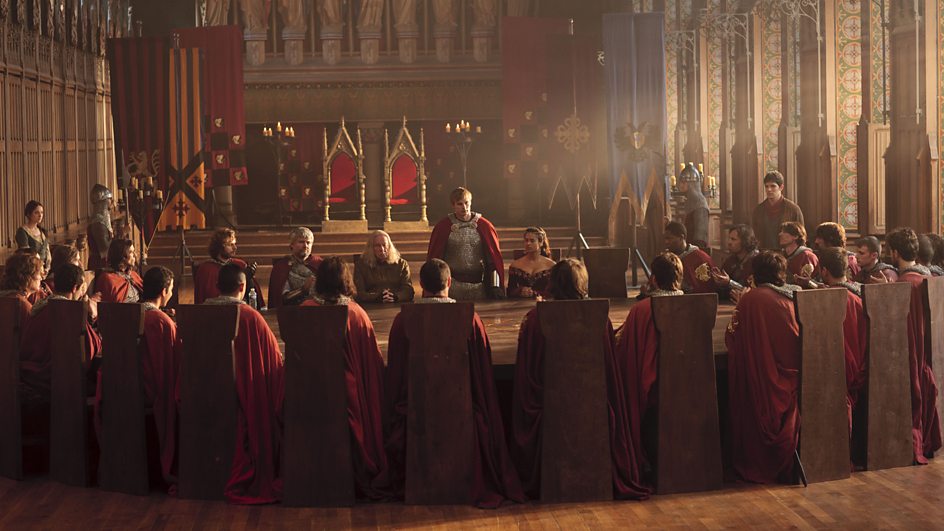
The final episode of ‘Merlin’ aired on Christmas Eve in the UK and because I once had a rant about what felt like sloppy writing, I thought that it might be a good idea to speak about how the final two episodes, entitled ‘Diamond of the Day’ held up in light of my previous uncertainties and overall expectations. Unfortunately, this will not be spoiler free so I will wait until you have returned.


There were many things that these two episodes promised and were hoped for. Not the least of which was Merlin’s revelation of his magic. We have spent five seasons with Merlin and Arthur, watching their relationship develop from uncertain strangers to the greatest of friends, which has been helped greatly by the chemistry that exists between the actors who play them. Colin Morgan and Bradley James have given these legendary characters great warmth, heart and conviction. We have shared their anxieties, triumphs and failures and watched with great anticipation for the moment when they became the characters of legend that we were familiar with, ready to stand shoulder to shoulder in the creation of Albion.

But, while the last few series have helped to lead them to that moment, there has been an element of uncertainty in regards to the Pendragons’ attitude to magic; that it is a great evil that must be purged from Camelot. So while we saw a great friendship develop between Merlin and Arthur, we have also felt anxious. After all, as I said once before, Merlin’s magic is as instinctive as breathing. He IS magic. And he spends his days serving (and saving) a Prince, a King and a friend who would feel betrayed when his secret finally came out. After all, it must.

Copyright of moody Merlin goes to the BBC and Shine
So how did I feel when the credits rolled for the final time?

Honestly, I felt a bit disappointed. Not because of the actors (who each did a beautiful job) but because of elements of the story. I will focus on the second part of ‘Diamond of the Day’ for a lot of this analysis, since this is where a lot of my problems lay.

The build-up to this finale has been magnificent. The war between Arthur and Morgana has been in existence since Morgana became a legitimate big bad back in series 4 (series 3 doesn’t count because Arthur was unaware of her allegiance at the time). Morgana’s discovery of Emrys’ true identity was something fans craved and dreaded, knowing that it would change everything we knew. When it came, it was handled beautifully and her plan to get rid of him was rather clever. Get rid of his magic, his only real form of protection, and then take him out. Of course it would have worked better if she had actually done her homework and made sure she didn’t trap Merlin in a place where he was able to re-access his magic tenfold, but she doesn’t have Gaius (aka the Knower of All Things) on her side so she can be forgiven for that.

So the battle starts, fighting takes place with a lot of slow-mo scenes, Aithusa breathes fire, Merlin is riding to king in Emrys-mode, does some fun lightning tricks and is generally awesome and epic…and Arthur gets stabbed by Mordred. Of course, Arthur is still a better fighter and takes out his attacker about ten seconds afterwards (unlike Mordred who seemed to miss all the vital body parts). Merlin finds him, hides him and finally, FINALLY, with emotion and utter exhaustion, reveals his magic to his friend.

I must take this opportunity to point out the acting of Morgan and James here. You can feel Merlin’s terror and relief as he tells his best friend everything he has wanted to tell him for so long from the way his voice quakes, while Arthur’s slow realisation and feeling of betrayal just kicks you in the gut. This is the one thing fans have feared the most; that the epic bromance we have grown to love between these characters would fall apart the minute the truth was revealed. It’s one of the reasons why I think this was so effective. Arthur is badly injured and HAS to rely on Merlin to keep him alive, which gives the pair time to get their equilibrium back.

However, I will admit that I was confused by the initial timing of this. After all, Merlin has had many opportunities in the past to reveal his magic and he was in disguise when actually doing his lightning tricks so why here? Why now? Well, consider the above. Morgana now knows his secret. Merlin knows she isn’t dead and she has attacked him once before. There is no time for secrets now. She will come after him again. Either Merlin reveals himself, or Morgana will force him to do so. But this is only a theory and I would gladly welcome other inputs if you want to share them.

Back in Camelot, of course, Gwen has guessed the truth (again, a moment of ‘Why now?’), Gwaine has to learn that his girlfriend is a traitor and watch her get executed and Gaius sends Merlin on a quest to save his king. All very important points but honestly, not the focus of this review.

I know that there are probably those who are wondering why I was so disappointed with this episode. Was it the fact that it felt a bit rushed at times, knowing that this was the final episode? Did my disappointment lie  in the death of Gwaine, who has pinballed between being one of my favourite knights to being the one I want to slap the most due to stupidity? Was it the death of Morgana, who went with a whimper or Arthur, who went with a sigh of gratitude? Was it Merlin’s failure to make everything right, the lack of reset button, Gwen’s heartbreak or the final scene of Merlin all on his own?

Yes and no.
(c) BBC and Shine
Congratulations Leon! You managed to survive 'Merlin'.
My disappointment comes from expectations that have been built up during previous seasons and interviews. From the moment Arthur and Merlin started working together and becoming friends, I had been waiting for the day when Merlin would finally be allowed to be himself around his best friend. The day when the two could stand side by side with no secrets between them and kick some serious ass. This has not come to pass. Oh his destiny has been fulfilled, just not in the way I would have hoped.

And that is what disappointed me so much.

But after a few days of ranting, I realised something important. All of my hopes and expectations were not just my own, the actors or even the fans. I had been sharing my hopes with Merlin the entire time. He has spent so long in the shadows, disguised and hidden in plain sight. He has worked behind the scenes, nudging, tweaking, cleaning and protecting without any sense of gratitude or reward. Very few people knew what he did and they became fewer and fewer as time went on, leaving him more and more isolated. Being a sucker for happy endings, I hoped that this would eventually end, with Merlin getting the respect and honour he really deserved. And Merlin, hearing what he was prophesised to do, hoped for a day when he could finally be free to be himself, standing alongside his friends and allies to create a wonderful future.

In the end, he gets a breathless ‘Thank you’ and acknowledgement from his dying King and the respect and gratitude from his Queen and friend (although it is debatable if he knows this). He doesn't get a happy ending. He gets a seriously depressing one, with only a pinprick of hope at the end of a very long tunnel. And that makes me sad, especially when our last shot is of an old Merlin in the present day, walking past the lake alone, waiting for an unknown day when his friend will return.

It is up to the fans to decide what happened after Arthur’s death. I believe he wouldn't go back to Camelot for anything except a short visit. Maybe he would keep an eye on things from the side-lines but with the promise of Arthur’s return and the uncertainty of when this will happen, I'm of the opinion that he would stay close so he know the minute he was there and that is simply not something he could do from Camelot.

The episode itself is far from perfect and, as I have mentioned, feels rather rushed at times. In a way, I wish that Merlin's revelation to Arthur had come a few episodes earlier. The writers have never made it a secret that the end of 'Merlin' would come with the death of Arthur, but the I wonder if the tragedy would have been greater if we had been given a few episodes where the two are trying to find their feet again rather than the much quicker journey we had here. The writers and producers are apparently in negotiations with Shine to create some ‘Merlin’ movies and I watch the proceedings with a sense of hopeful caution. Whatever way they choose to go with these movies (if they are eventually made) there will be problems, mostly in terms of character development. Are we going to go backwards in terms of the story? Continue where we left off? Or reboot completely?

I guess only time will tell, but I don’t think my desire for Arthur and Merlin to stand as equals, with no secrets, is ever really going to fade.

(c) BBC and Shine
Or my hopes for a happy ending for Merlin.

Thursday, 27 December 2012

Reflections

So Christmas has come and gone for another year and all too soon we shall be entering 2013. Which makes this a good opportunity to look back on the last year and consider what has happened and what has been learned.

2012 was definitely a game changer in my life. Oh I graduated and started my publishing course in 2011 but this was the year where I completed and earned my postgraduate degree. I have those photos to prove I was there and the certificate that tells me and everyone who cares to know, that I am an MLitt (Master of Letters). It doesn't matter the amount of work you do to achieve something, the day you finally get it is the day you will remember. Unless, perhaps, you are me. While the graduation was something to remember, I was given a chance to do the one thing I wanted when I walked in the door for the Christmas holidays; celebrate with my family.

But what about my personal and professional life? Well, both received a bit of a shake when I started my new job in October and let me tell you, after the last year, I still find it incredibly startling to know that the financial side of things is more or less sorted. Every student will tell you that life is difficult financially. You need to skrimp and save as much as you can, or blow it all on nights out. You rely on a loan to help you survive. But it is almost harder to do this as a postgrad. Loans are not as readily available and it does become a struggle. It's one of the reasons why so few people do what I did, and start another degree so soon after the first one. I was lucky. And when the paycheck comes in, I feel even more lucky.

But of course, I am not the only one who has been affected by the last 12 months.

The world sat up and watched the Olympics and Paralympics in London this year. We watched our athletes with pride and admiration. We saw the superhumans achieving remarkable feats.Some were doing things that had never been attempted before (either by the games or their own countries). Some people were doing something they had been doing for many years, trying to improve on past performance. And others were doing something for the last time, choosing to step back after a long career.

We saw the best and worst of humanity exposed.

We cheered for successes, groaned at feats of stupidity and mourned tragic losses.

We saw hard work and creativity pay off and we saw others fail to do what they should have done.

I know there are many who would prefer to forget everything that happened in 2012 because it was hard or difficult or painful. To them I say, 'I'm sorry. I'm sorry for the pain you have gone through/are going through. I'm sorry that things are not easy and I'm sorry that you are struggling.' For them, I hope that the next year is easier. I hope that the struggle pays off and that they can keep going despite everything.

For now, all I can do is offer them a hug and a promise that things will get better.

Truth be told? I see 2012, not as a year to remember, but as a year of survival and change. The end of the world came and went and we are still here.

Happy New Year everyone. May it grant you everything you need and may all your struggles be rewarded.

Sunday, 9 December 2012

Hunger or satisfaction?

Considering this blog was originally supposed to be dedicated to publishing, I thought it was about time I actually started talking about it in a way. Considering my job is off limits, perhaps the best way to do this should be through the review of books that I have read recently.

Yes, I know many people are doing something similar so I'm not going to be doing actual reviews per say. After all, there's only so many times you can listen to people picking apart the same things over and over again. Instead, I'm going to do something a little bit more in depth if I can and write about something that struck me because of one thing or another.

So, how is this going to work?

I will take a book (or series) and give you my own opinions regarding it. Simple enough? Yes, but I will be assuming that other people have read whatever I'm talking about and while I will try to keep things as spoiler-free as possible, I will issue warnings when this is about to take place.

And what better place to start than with the Hunger Games trilogy?

I'm a bit late to the party with these but with one thing or another, I didn't get the opportunity to read them until this summer. And I will admit, I read these AFTER watching the film so my opinion may be a bit skewed in contrast to most people's.

I assume most people know the story so I will keep this section brief. Katniss Everdeen lives in Panem, a futuristic world (possibly America) that has been ravaged by war and has been divided into 12 districts. Every year, two children between the ages of 12-18 are chosen at random from each district to be Tributes for the Hunger Games, a brutal reality show that has the participants fighting to the death until only one remains. When Katniss' sister is chosen, Katniss volunteers to take her place and must survive the Hunger Games and the anger of the Capitol.

Just a warning, some spoilers may exist for a while. If you want to avoid them, skip to the section after the picture of the note.

ABANDON BLOG!!!

The character of Katniss rather impressed me in a number of ways. One, she is a survivor, feeding her family and generally making sure that the people she cares about are looked after, following the trend of a lot of Young Adult books (growing up too soon, the ineffective parent etc). But it's not just that she is a physical survivor that struck me, it was her mental capabilities as well.

In most books, the protagonist is pulled into a battle or a cause and fights for it because they believe in it. They were not looking for the cause, but now it is there, and they are going to make things right. But Katniss REALLY is not looking for a cause. She does not want The Cause. The Cause can find someone else because all she wants is to see tomorrow and make sure the people she loves survive. And that makes her appear cold and uncaring. But I can see where she's coming from. You never know what the Capitol may make you do next so you have to guard your heart in case something happens to someone you care about. So she makes that circle as small as she can.

The issue that most people seem to have with her lies in her effectiveness with The Cause of the book...or rather her ineffectiveness.

In the climatic moment of The Hunger Games, Katniss manages to defeat the Capitol by making sure that she and Peeta both survive, instead of just one of them. She has let Peeta into her circle and she doesn't want to let him go, but her action causes ripples and the world becomes just a little more unstable because of this. She doesn't realise the full implications until someone explains it to her and even then, she doesn't know just how deep this goes until it is too late and she is in the middle of it.

For several people I've spoken to about the book, their problem is that Katniss goes from being this kick-ass survivor to a political puppet that doesn't really do anything except gripe, moan and have emotional breakdowns.

But like I've said before, Katniss was a survivor because she had to be. She had time to learn how to survive and to understand how the world worked. What she could get away with and what she couldn't. In the space of two books (about a year or two), what she knows changes drastically. People she trusts turn out to have ulterior motives, others assume she knows more than she does and her own motivations are questioned. She doesn't have time to breathe or understand this new world. She's just pushed into it. She has to be one thing or another to protect the people she cares about and honestly? She is rarely given a moment to just 'be'.

As for the people she's around, her perceptions are screwed with over and over again. People she trusts become people she has to be cautious around and vice versa. Take Gale. Her best friend in the whole world and one constant in a world of uncertainty. She has to deny that relationship to protect him but eventually, that constant becomes something she doesn't like and cannot deal with. And Peeta? Her rival in the Games to her rock during the aftermath, he is eventually taken from her and altered, leaving her floundering and trying to cope in a situation without someone that she can really trust or even trusts her to the extent she requires. She is being pushed, prodded, manipulated and shaped into a figurehead. A lovestruck teen, a beautiful rebel and an eloquent speaker. But she is none of those things. Her words are not her own. Her looks are not her own. Even her fighting abilities are not her own since her rebellion insist that she not be placed in any danger. Her very sense of self is being pushed aside and her identity is being taken away from her by people who want to use her for their own ends.

Can you honestly blame her for having several breakdowns when all of this is happening?

Even when she tries to take charge and be proactive, she isn't really allowed to. She's a figurehead, not a leader. It's not about what she does as it is about what she is supposed to represent. It doesn't matter that her actions were motivated by her own selfish desire to survive and not have to take out her friend. To everyone else, her actions were a rebellion against the system that was holding them back and gave them the courage to speak out and to stop accepting things as they were.

Let's look at another symbol of hope. Harry Potter is 'The Boy who Lived' who eventually was seen as the hope against darkness. The difference here is that his actions took place when he was a baby. It wasn't a conscious action on his part and people understood that. He was given support and opportunities to prove himself. He made proactive decisions because they were the right thing to do and he fought the darkness on his terms. When Katniss eventually does it? She loses some valuable people and nothing much comes from it. Seriously, things blow up before she can really do anything. The one proactive thing she does is ensure that the circle of dictatorship doesn't continue.

I think that is why so many people have a problem with her. Because she started as a girl and then became a symbol. A symbol she did not mean to become or was really given an opportunity to understand. Harry had about seven years to get his head around what he was and to choose to take a particular path, even when people he trusted were manipulating him to a certain extent. But where Dumbledore tried to find another way and struggled to accept what Harry would have to do, the people around Katniss are manipulating her actions based on the greater good at the expense of her own welfare.So much of what happens to her, happens in spite of her. She is defined by one moment, not a series of incidences, and unlike Harry, she is very aware that she doesn't want to be there and that someone else would be much better suited for the role.

But more importantly, the trilogy is about her. The Harry Potter series was about Harry finding his place in the wider social context because it kept finding him and drawing him into it, helping him to grow from a symbol to a leader. The Hunger Games is not about the Capitol, or the rebellion or even the Games. It's about Katniss and how she copes. It's about how she is being broken by the rebellion the same way that Peeta is broken by the Capitol. The only difference is that the Capitol used more obvious methods to get what they wanted. Yes there is a wider context but that is all background information rather than a central theme and that is an important distinction to make.  Unless you understand that, you are going to be disappointed.

It's safe now

On the spoiler-free side of things, I think the trilogy is something you should check out if you haven't already. I know many consider the last book to be the poorest of the trilogy but think of it as a study of psychology rather than judging the characters based on what you see. It's a fascinating exploration of the human mind and a sobering look at our current culture.

Wednesday, 28 November 2012

Shifting perceptions

Have you ever had one of those moments when you look at something familiar and see it in a whole new light? I don't mean that guy or girl you've been friends with for ages, but a book or a movie that you may feel you know inside out, until you look up one day and see something you never expected? I don't just mean the jokes you didn't get when you were younger. I mean a complete perception shift in how you relate to a story or a character. This could be days, weeks, even years in development, but it will happen.

This is not quite related to tvtropes' 'Fridge Brilliance' page (although it is similar and a very good place to start rethinking your perceptions).

Allow me to put this into context based on two moments I had.

I am a big Disney fan. I love (most) of the films for one reason or another. Sometimes it will be the story, the music or the animation that will stick with me So it will come as no surprise to learn that 'The Little Mermaid' has long been a favourite of mine. It was my first introduction to the genius that is Alan Menken and the delight of Howard Ashman and his lyrics.And it was one of the first films that made me appreciate how time consuming and beautiful animation can be.

So it came as something of a shock to me when I rewatched the film a few years ago to realise that something had changed. It wasn't the film, it was still as beautiful as ever. The music was still incredibly catchy (to the point where I bought the entire soundtrack).

It was me. Or more importantly my perception of Ariel.

Doesn't matter how old I get, I LOVE her hair!
As children, we are meant to believe that Ariel is this strong, confident individual who has to fight mistaken perceptions and assumptions in order to follow her heart to her true love.

As an adult, I saw things a bit differently. I saw a child who kept trying to be a grown up when she clearly wasn't ready to be. I saw a selfish, sulky little girl who didn't look beyond her own wants and desires to see things from another perspective. In her father, I no longer saw a tyrant who was denying his child the thing she desired most, but an old, frightened man who didn't really know what to do and was doing his best for his children and his kingdom.

I got this feeling again when watching Pixar's 'Brave' (another excellent film). After seeing it, I got into a discussion with a friend of mine and it was rather enlightening to have the two perspectives. He loved the character of Merida, with her bow and arrow, firey temper and intelligence whereas my focus was drawn to the more dignified Elinor, with her confidence, intelligence and great depths of love.

Neither character is perfect, but like Triton, I saw Elinor as someone who was desperately trying to keep a very delicate situation from combusting. Think about it. She has lived through one great war in her lifetime. The last thing she wants is for her children to go through the same danger. So the plan is to have her daughter marry into one of the three remaining clans in order to keep this stability.

Can I blame her for essentially trying to mould her daughter into a copy of herself? No. Look at the respect she has as a wife and a queen. When she walks into a room, people pay attention to her. Who wouldn't want that for their child?

But do I think she was RIGHT to do so? No.

Merida does grow on me and she learns to use the skills her mother taught her, but I spent a huge chunk of the film thinking she was a complete brat. Would I have felt the same way at 13 as I do at 24?

I don't hate 'The Little Mermaid' by any stretch of the imagination. The concept of believing in something so strongly that you have to go against the people you love is one that has been told again and again and can, at times, be rather inspiring if the reason is powerful enough and the idea is executed well. The ones that succeed are the ones where the primary focus is on something else. In 'Brave's case, the primary focus was relationships and communication. In 'The Little Mermaid', the focus was on identity and choosing your own path.

Yet another redhead with wonderfully awesome hair!

Not every new perception is a negative one. Several years ago, I read two books by L.M Alcott entitled 'Eight Cousins' and 'Rose in Bloom'. The story is about a little girl who lost her family and is sent to stay with an uncle she has never met. He lives near a number of relatives; aunts, uncles and Rose's eight cousins (don't ask me to explain the family tree. I'm not sure I could). They are all boys and it's quite interesting to see the dynamic between the sexes. The second book involves a much older Rose and how she copes with the temptations and responsibilities of being a young woman of good looks and fortune, even in issues of the heart.

The second book does feature all of the cousins, but the eldest ones get particular focus throughout. Among these is Archie, the eldest and most sensible. I absolutely love him as a character, mostly because steady, kind-hearted individuals in fiction always catch my attention, but the first time I read it, he was my favourite. I grew more and more frustrated as Mac (the bookworm of the group) was featured more often. I found Mac boring and annoying, which you would think was strange considering how often I myself read.

But I loved novels and stories. Mac was busy learning anatomy.

Let's skip a decade now and I am reading the same two books and learning all about the same characters. My feelings about Archie hadn't changed, but they has mellowed significantly. I started seeing Mac in a completely different light. Yes, he was still studying, but I suddenly realised he wasn't a one-trick wonder. He  simply loved to learn and the things he studied were vast. Yes, he still read about anatomy, but he read (and wrote) poetry himself. Yes, he still became ill after reading in the sun, but now I had memories of having very mild sunstroke and how frustrating it was to have to lie in a cool, dark space and have nothing to occupy yourself.

And more importantly? While he was still absent-minded at times, he was willing to give up his comfort and confidence for someone else several times, even if it made him look foolish in the process.

Suddenly, the character I had hated most as a teenager had become one I had grown to love a great deal.

I think that's one of the reasons why we should not only try new things, but should sometimes take a moment or two to look back and revisit things we had forgotten. Do we feel the same way about a character now that we know more from our own experiences? Or perhaps, do we see where the villain is coming from? Are the heroes really that obvious, or are there chinks in their armour that we can see at last? And in a series of any description, how has the story changed now that you know what's up ahead?

You may discover something you never expected.

Monday, 19 November 2012

Repetitive frustration

Let me make something clear. I enjoy good stories. It doesn't matter what genre or format they come in, I love them. Mystery, romance, adventure, suspense...or even books, television, cinema or even radio. If a story is good and innovative, you've already won points from me.

Which is why it is incredibly frustrating to be in the middle of the latest season of Merlin and realise that the last couple of episodes haven't really done that.

This puny table cannot hope to hold the awesome of Merlin

To me, Merlin is a bit like Doctor Who in that you have an excellent premise for some really engaging character development and story arcs. And indeed it has delivered in the past.

The concept for people who do not know the plot. It's the story of King Arthur and Merlin of legend, before the real legends begin. Merlin is a young warlock, sent to Camelot by his mother and ends up becoming the manservant of Prince Arthur (later King...let's face it. That's hardly a spoiler). Except Camelot is the centre of Uther Pendragon's anti-magic regime and for someone whose magic is as instinctive as breathing? This is a problem.

From here on, I will be talking about events up until the recent episodes so if you do not wish for spoilers you should probably leave now. Don't worry. I won't feel offended.

Be like that.

Originally, the stories were a bit formulaic. Magic from outside tries to find its way into Camelot, Arthur gets into trouble, Merlin saves him with magic, no one finds out, life continues.

Rinse and repeat.

Of course there are some elements of the legends that had to be sorted. Morgana le Fey had to become an enemy. Guinevere (or Gwen) had to become Queen. And the writers managed that in slow, believable ways. Of course it helped that after each season a year apparently passes in Merlin-land.

So, by the third season, Gwen became a love interest, and Morgana was betraying and plotting left, right and centre. But here lies the problem. The writers recognised that Morgana couldn't hide in the shadows forever, and more power to them, so she was found out and banished. Except their main enemy had now gone. So what did they do?

Ask for a guy dressed in black. Clearly he cannot be evil.

Cue Agravaine, Arthur's estranged uncle who worked for Morgana and basically tried to destroy/kill Arthur at every available opportunity.

He dies at the end of the season.

So what happens next?

Well the season started off promising enough. Morgana was as nasty as ever, but badly broken after being imprisoned with Aithusa. We don't know how or why and that's interesting.

But at the same time, it's concerning. Why was a baby dragon on its own? Especially considering all the hype about its birth which was met with such joy by Merlin and his lonely dragon friend? Why was nobody keeping an eye on her? Even if it was a matter of dragon's natures, you would think the sheer rarity of dragons would have accounted for something.

Mordred has appeared again, leaving Merlin with some serious dilemmas about protecting Arthur and doing the right thing. Arthur always comes first, but I'm not sure I like the cost it's having on the warlock. There's character development and then there is being unusually cruel to your characters.

AND THEN! 

The thing that filled me with more anger than I have experienced in a while. Morgana gets a new mole. And who is it?

Gwen.

I'm noticing a theme with regularly occurring female characters.

Yep. The Queen herself. THAT Gwen.

Granted the episode preceding that gave us an explanation. She was kidnapped and locked in a dark room with mandrake roots (which fill you with horrific images. In Gwen's case, showing images of her friends laughing at her pain) with Morgana treating her kindly in between.

But the reason it frustrates me is in the execution. There is an implication that she could have been there for days, but it's not specified. In 45 minutes, it looks like she hasn't been there long at all. One minute, she is refusing Morgana's offers of friendship and then suddenly...she's her new best bud! Yes, her brother has died. But she has been through pain and loss before. And at the hands of people she cared about.

Why was it so easy to break her this time?

If this had been a two parter, where we were given more of a sense of time, then maybe this would have worked.

But then we got our first episode of evil-Gwen.

Colin Morgan had a couple of brilliant moments as Merlin, including a memorable moment when he desperately attempts to revive Arthur and it looks like he's failed. I won't pretend that Merlin's absolutely distraught face didn't break my heart. But I spent the whole time listening to Gwen and watching her, wondering how little red flags weren't popping up with people who knew her. Yes, her husband seemed to be dying but WHEN IN THE HISTORY OF ALL THAT IS HOLY would Gwen ever accuse Merlin of trying to kill her husband?

This isn't just me looking at it with more knowledge than the characters. Merlin has been accused of crimes before and Gwen has stood by her friend EVERY TIME. How did nobody except Gaius find this suspicious? I'm beginning to think knighthood takes away your ability to think for yourself.

It feels sloppy, like the writers are desperate to continue the trend they started almost two years ago. An insider betraying Camelot and Arthur. But surely there's room for other stories beyond the ones that have been used many times before. 

What about Merlin recognising how much he's changed and whether he likes going down that route? 

Or meeting more potential allies?

A friend recognising his magic? (seriously writers, are you determined to isolate him?)

Or Arthur. He's no closer to accepting magic than he was at the start. He's still convinced it's evil. Stop creating hope only to take it away.

What happened to Aithusa?

You have knights of the Round Table. Give them a plot.

Seriously writers. Whether you create novels, films or a television series, it's not too much to ask that sometimes you look beyond your borders and try and think of something new. That you treat what you have with the same dignity and respect that you gave it at the beginning. That you consider every avenue and before you decide to go down a particular route, you remember to ask 'Why?'

 Your skills deserve it. Your fans deserve it. Your series deserves it.

And most importantly? Your characters deserve it.

Update: Really writers? It was magic? You took your time with that one and honestly? It felt a bit like a cop-out. But thank you, not only for reversing it, but for actually progressing the magical situation at last.

Tuesday, 13 November 2012

Wanna help me out here Suzie?

Once again, time passes but it looks like I will be trying to make updates a little more regular than usual with references to interesting stories and even discussions about some of the books I've been reading recently.

So what has been happening in the meantime? I've completed uni and have managed to find a job in Publishing!

Bring out the Party Cannon!

I won't say where, simply because I do not wish to give anybody the wrong impression about what goes on in it and also because my job is not necessarily going to be the primary focus of many of my blog posts. I will certainly mention things if I think they are interesting, but the comings and goings of my job and the people involved deserve some privacy unless they choose to reveal it themselves.

I will, however, reveal that I am currently living in a new city. This will not be a shock to those who know Publishing, even a bit. Most publishing companies exist in, or near, big cities. It's a fact of life. You need to be close to the markets you are catering for and the people who will help create your book.

Now, this city is a LOT different to Stirling not just in terms of overall feel and architecture, but also the people.

My God. The PEOPLE!

They. Are. EVERYWHERE!

This sounds rather redundant considering 'Duh, city!' But as you may (or may not) be aware, Stirling is also a city. But it is remarkably different. Honestly, I think it may be a city in name alone because it seriously does not resemble where I am now. Granted, this may have something to do with my familiarity of the place (Very Familiar vs Not Very Yet) but I think it also has something to do with the overall layout of the place.

In Stirling, the shops you wanted most were in a few very specific set of streets. You rarely went beyond them and the supermarkets were part of that centre.

Here? Not so much. I'm still not sure where the nearest Tesco's is (I mean a proper one. Not an Express or a Metro) and all the things I want are a bit scattered or down a number of branches of road that I'm still trying to figure out. There are two shopping centres that I have found so far and neither feels very extensive. Granted, neither was Stirling's but I think it may have been the design that made it feel bigger. Those two just make me feel a bit claustrophobic.

It makes me sound like I hate where I am, but honestly I don't. I don't necessarily love it either because I feel so unfamiliar with it and don't like the idea of exploring unfamiliar territory on my own but I don't want to run away and leave.

It's kind of the difference between Ponyville and Canterlot...I have ponies on the brain.

Of course, despite my pleas, Suzie Sat-Nav wouldn't be much help here.

A pity really.

I could do with the company when I'm out and about.